







Search Results for: homogenized competition
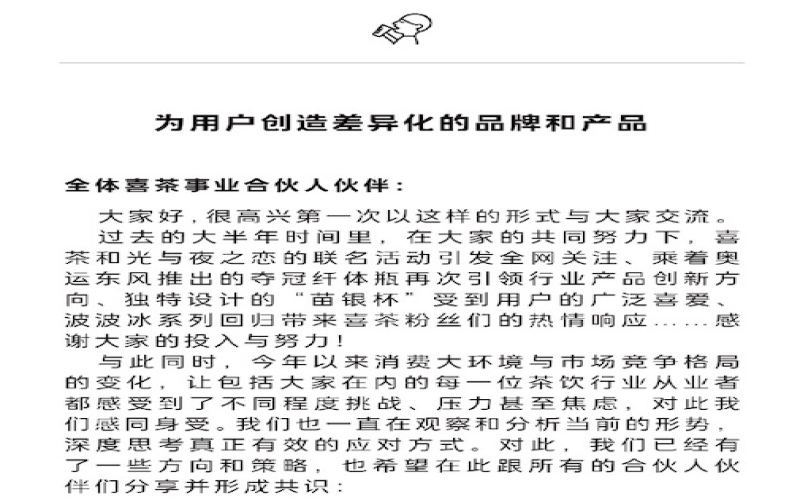
HEYTEA's Internal Letter to Partners: Breaking Through with Differentiation, Rejecting Homogenization and Cutthroat Price Wars
On September 18, Heytea sent an internal letter titled "Creating Differentiated Brands and Products for Users" to its business partners, directly addressing the increasingly fierce homogenized competition and low-price involution in the tea beverage industry. The letter proposed "creating differentiated products and brand experiences for users to the utmost" as the direction for breaking through, explicitly stating it would not follow popular categories, not engage in pure low-price competition, and would control the pace of store openings and focus on operational quality. However, netizens had mixed reactions: some supported the differentiation strategy, while others complained about weak product innovation and declining quality. Can Heytea win back consumers with this strategy? This article will sort out the key points of the internal letter and voices from all sides. [more…]

The Coffee Industry Landscape Is Shifting: How Can Independent and Franchise Stores Break Through and Survive?
The coffee market is undergoing a new round of reshuffling. The number of coffee shops nationwide has approached 200,000, yet the survival cycle of newly opened stores is worrying. A large number of entrepreneurs are pouring into the coffee sector, including both independent coffee shops and franchise stores of chain brands. However, price wars and homogenized competition have caused many stores to bow out quietly within just two or three months. Under the squeeze of giants' low-price strategies, how can independent cafes balance price and distinctiveness? How should franchisees avoid pitfalls? This article provides an in-depth analysis of the reasons behind the wave of coffee shop closures, and, drawing on brand cases such as Front Street Coffee, explores ways to break through. [more…]
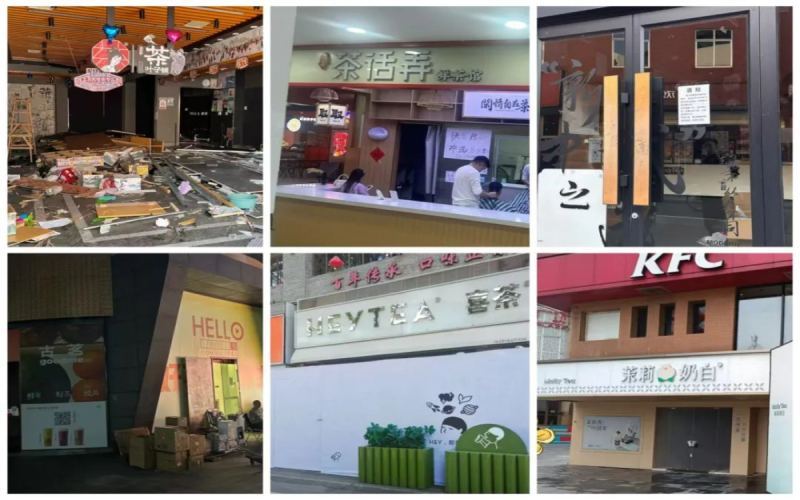
Over 160,000 tea beverage stores closed in a single year, and the pace of expansion among leading brands has clearly slowed.
Over the past year, the tea beverage market has undergone a dramatic reshuffle. According to Zhanmen Canyan data, the total number of stores in the milk tea beverage industry reached 412,600, with 142,300 new openings, but the net growth was -17,700, meaning that more than 160,000 stores exited the market in the fierce competition. Although leading brands such as Mixue Ice Cream & Tea, Guming, Shanghai Auntie, and ChaPanda still saw growth, their pace of store expansion has clearly slowed. Nayuki's stock price plummeted 93%, wiping out nearly HK$27 billion in market value. Product homogenization is severe, consumers are experiencing aesthetic fatigue with similar drinks, and the industry is accelerating into a harsh winter during the off-season of autumn and winter. [more…]
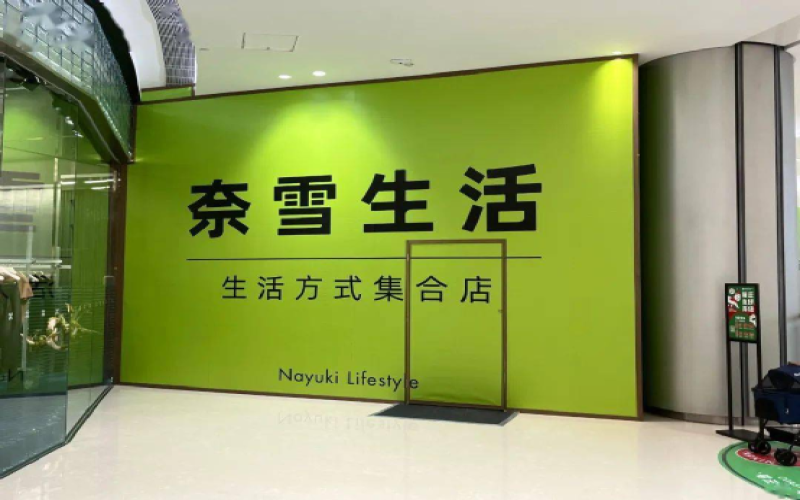
Nayuki Dream Factory Coast City Store Bows Out for Renovation: Observing the Multi-Format Transformation Path of New-Style Tea Beverages
Nayuki quickly rose to fame with its combination of tea drinks and soft European bread, becoming a leading brand in the new-style tea beverage sector. However, its largest store nationwide, Nayuki Dream Factory in Shenzhen Coastal City, recently quietly closed, and the site will be upgraded to "Nayuki Life," a lifestyle concept store. This thousand-square-meter flagship store, which once generated nearly a million in revenue within three days of opening, carried Nayuki's ambition to experiment from tea drinks to coffee, craft beer, Western cuisine, retail, and other multi-format ventures. From Nayuki Tavern to Nayuki PRO, and further to Nayuki Bookstore and ready-to-drink product line layout, Nayuki has continuously tried to break the boundaries of tea drinks. This renovation of its largest store reflects the collective anxiety of brands seeking differentiated breakthroughs amid intensifying homogenized competition in the new-style tea beverage industry. This article reviews the rise and fall of Nayuki Dream Factory and explores whether multi-format development can truly be the way for tea beverage brands to break through. [more…]

Observation of the 8th Lujiazui Coffee Festival: Brand Merchandise Bags Become a Social Focus as 270 Exhibitors Compete in Creative Marketing
The 8th Lujiazui Coffee Festival recently kicked off, with the five-day event bringing together 270 participating coffee shops, the largest scale in its history. In addition to more than a dozen overseas specialty coffee brands from Australia, Japan, Thailand, Singapore, South Korea and other places, the creative competition among exhibitors over peripheral giveaways is equally eye-catching. From oversized canvas tote bags to red and yellow plastic bags that replicate the style of wholesale markets, brands are using uniquely designed shopping bags to attract attention and generate buzz. As coffee itself becomes increasingly homogenized, these peripheral products, which are both practical and highly shareable, are becoming a "hard currency" more sought after than coffee at the festival. [more…]
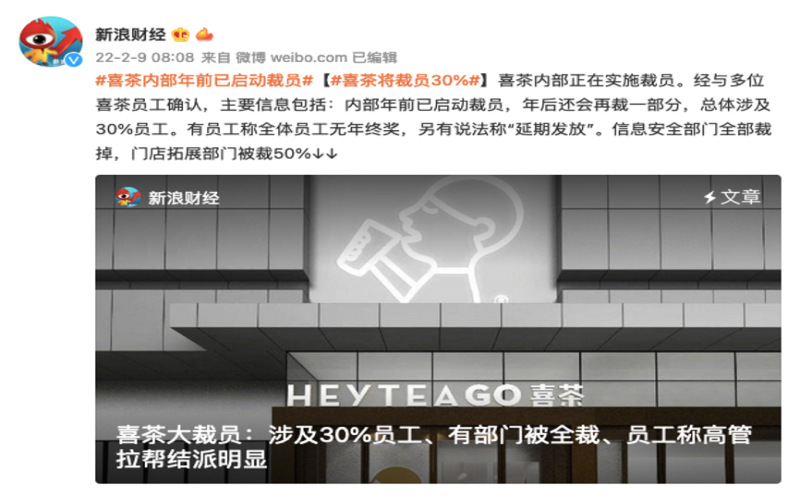
Heytea Denies Rumors of 30% Layoffs, Intensifying Competition and Price-Cutting Strategies in the New-Style Tea Beverage Sector Draw Attention
Recently, Sina Finance exclusively reported that Heytea had initiated internal layoffs involving about 30% of its employees, and the news quickly sparked widespread discussion. Heytea responded promptly, saying the report was untrue and that there was only normal personnel optimization based on year-end performance reviews. This incident has once again drawn public attention back to the new-style tea beverage sector: Nayuki is expecting losses, Heytea's growth is slowing, store expansion is decelerating, and homogenized competition in the industry is becoming increasingly fierce. At the same time, Heytea's countercyclical price cuts and moves to tap lower-tier markets have also sparked discussion. This article will sort out the sequence of events and present Heytea's operational changes and market challenges since 2021. [more…]

Luckin Coffee launched six new drinks in one day, four of which are city-exclusive; the "Slacking Off" Coconut Latte struck a chord with office workers.
Luckin Coffee has once again demonstrated its astonishing speed in launching new products, rolling out six new items in a single day, four of which are city-exclusive, with only the "Slacking Off Coconut Latte" available nationwide. This new product, which adds 0-fat konjac crystal balls to the iced coconut base, has been criticized as old wine in new bottles, yet its catchy name and "slacking off" theme precisely strike a chord with office workers' emotions, sparking widespread discussion on social platforms. Netizens outside the designated cities have complained about being unable to try it, while Luckin's tactic of riding internet buzzwords to drive marketing once again confirms its dual prowess in product innovation and topic creation. Since 2020, Luckin's pace of new product launches has continued to accelerate. In the face of homogenized competition in coffee and tea beverages, whoever can precisely grasp young consumers will seize market opportunities. [more…]
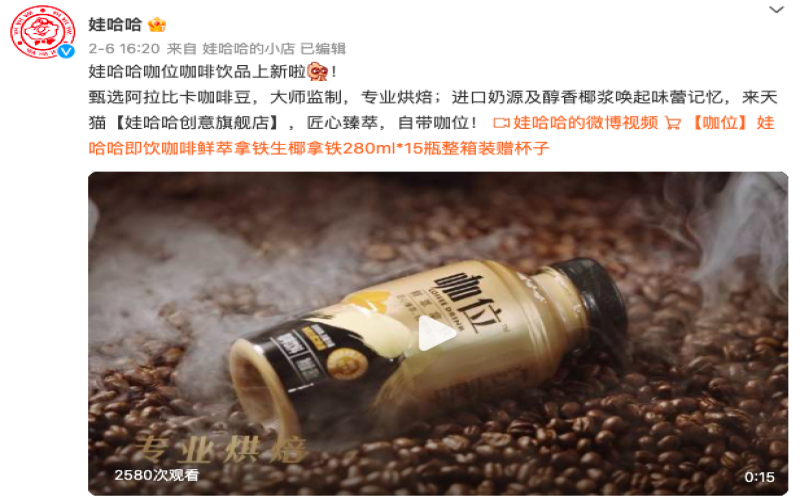
Wahaha re-enters the ready-to-drink coffee market after six years—can the belated "Kawei" break through the competition?
On February 6, 2023, Wahaha launched a new ready-to-drink coffee product called "Kawei," offering two flavors: Fresh Latte and Raw Coconut Latte, highlighting selling points such as imported milk sources and Arabica beans. This marks Wahaha's re-entry into the ready-to-drink coffee sector after the failure of its Maoyuan Coffee in 2016. However, the current ready-to-drink coffee market is already crowded with giants like Nestlé, Starbucks, Coca-Cola, and Nongfu Spring, and products are highly homogenized. Wahaha's entry at this time puts it years behind its competitors, and the market landscape has long since changed. This article reviews Wahaha's coffee attempts, the company's sales background, and the competitive dynamics of the ready-to-drink coffee market to explore the prospects of "Kawei." [more…]
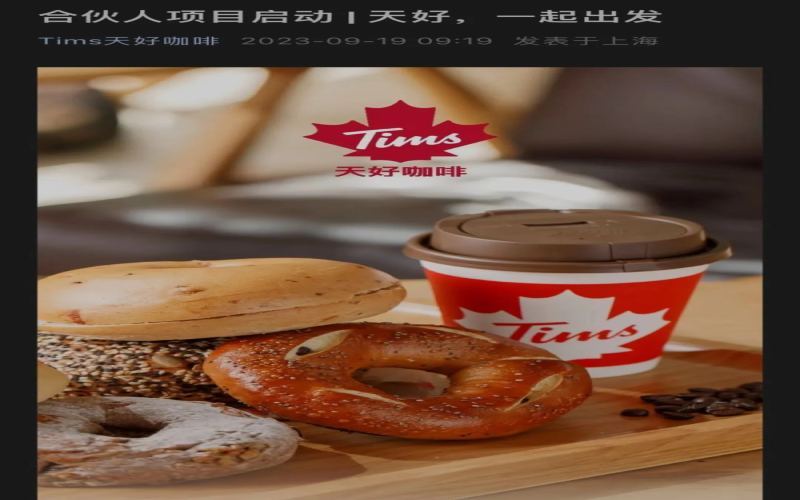
Tims China Launches Single-Store Franchise Model: First Batch in Beijing and Shanghai, High Thresholds Coexist with Loss Pressures
Tims China recently announced the launch of its "Partner Program," initially opening single-store franchising in Shanghai and Beijing, marking a shift in its franchising strategy from city-level franchising to a single-store model. However, the startup capital of over 600,000 yuan, its persistently loss-making financial performance, and the fiercely competitive market environment have sparked widespread discussion about this move. This article sorts through Tims' franchising details, cost structure, market background, and consumer feedback, exploring whether, amid intensifying competition in the coffee sector, opening single-store franchising is its "big move" to accelerate expansion or a reluctant response to difficult circumstances. [more…]
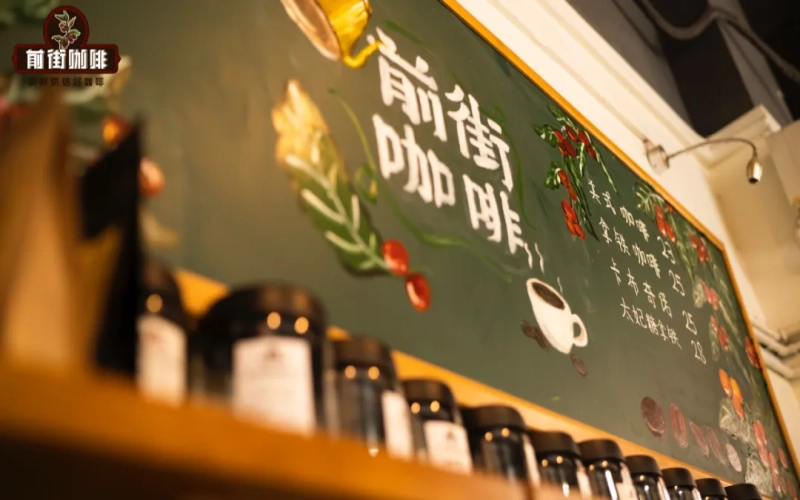
Why Is SOE Generally More Acidic? The Espresso Evolution from the History of Blend Beans to the Specialty Coffee Wave
Why does most SOE taste sour? Behind this question lies the complete evolutionary history of espresso beans, from single origin to blends and back to single origin again. This article, from the perspective of Front Street, sorts out the causal relationship between SOE and blend beans: early espresso was itself SOE, and blend beans became mainstream due to cost and stability, until Erna Knutsen proposed the concept of specialty coffee and James Hoffmann promoted SOE in competitions, after which light-roasted single-origin beans entered the espresso domain. The article will also explain why beans such as Mandheling and Brazil still insist on dark roasting, as well as the commercial considerations behind coffee shops choosing medium-light roasted SOE. [more…]
Luckin Plans Malaysia Expansion: Partners Still Undecided, Southeast Asia's Tea Beverage Battle Heats Up
Luckin Coffee plans to enter Malaysia, negotiating cooperation with local listed companies and formulating a five-year expansion blueprint. Currently, Luckin has over 20,000 stores in China, with only 38 directly operated stores overseas, all in Singapore. Malaysian netizens have reacted enthusiastically to the brand's entry, looking forward to discounted pricing but also concerned about intensifying market competition. Rumors point to the partner being Berjaya Group, the operator of Starbucks, but other sources say the contact is with a different party, and the final choice awaits official announcement. This overseas expansion comes as the domestic tea beverage market becomes saturated and price wars intensify; Luckin went from profit to loss in the first quarter, making Southeast Asia key to breaking the deadlock. [more…]
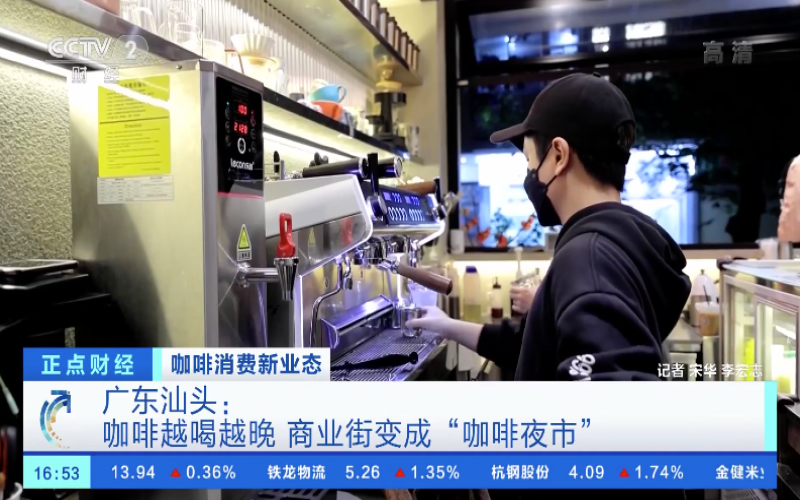
Nighttime coffee consumption is gradually becoming a new trend: coffee night markets are on the rise, and evening hours have become the main revenue driver for shops.
In the past, people used to drink coffee during the day and avoid caffeine at night to prevent it from affecting their sleep. However, as the coffee-drinking crowd continues to grow, a night coffee culture of drinking later and later is quietly emerging among young people. On a commercial street in Guangdong, 14 coffee shops of different styles are clustered within less than a hundred meters. After 9 p.m., every seat is taken, and the bustle is no less lively than a food night market. Some stores stay open until the early morning or even operate 24 hours without closing, and revenue from 8 p.m. to the early morning can account for more than 70 percent of the whole day's sales. This "small shop + outdoor" business format satisfies both the essential daytime demand and the nighttime social scenario, and also offers boutique coffee shops a new way to seek growth amid fierce competition. [more…]
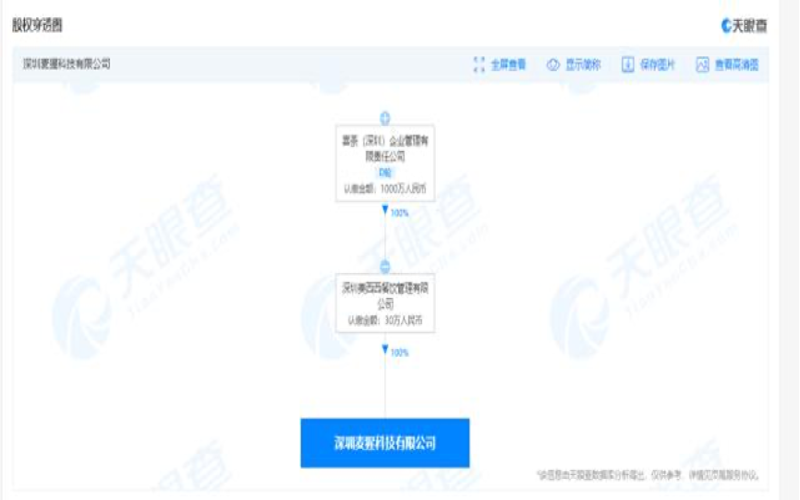
Heytea promises no price increases this year and stops selling drinks priced above 30 yuan; its affiliate adds fruit planting to its business.
Competition in the new-style tea beverage sector is becoming increasingly fierce, with brands constantly adjusting their strategies on products and pricing. Heytea has made a flurry of moves recently: on one hand, it announced that it will not raise prices this year and will no longer launch drinks priced above 30 yuan; on the other hand, its affiliated company added fruit cultivation to its business scope, attempting to control costs from the source. At the same time, Heytea is also facing controversies over layoffs and internal management. This article will sort out the logic behind Heytea's moves, as well as the trend of the new-style tea beverage industry extending upstream into cultivation, and will also briefly discuss the similar path in the coffee sector from brewing to cultivation. [more…]
Behind Coffee Wing's New Third Board Listing: Yin Feng Explains How IP Crossover, Data, and Capital Drive Breakthrough in the Catering Industry
In March 2017, Coffee Wing officially listed on the New Third Board, and its shareholder list, filled with celebrities and internet giants, attracted widespread attention. At a sharing session hosted by Catering O2O, founder Yin Feng delivered a speech titled "The Capital Path of Cross-Border Catering Driven by Data and IP," systematically explaining the consumer changes in the Catering 3.0 era, the timing for going public, two strategic approaches, and Coffee Wing's business strategy centered on "IP, cross-border, data, and capital." This article presents the full essence of Yin Feng's speech, covering catering industry trends, brand building, user operations, and marketing innovation, offering in-depth reference for coffee enthusiasts and catering professionals. [more…]
The Business Code Behind Coffee Wing's Listing on the New Third Board: Yin Feng Explains the Dual Drivers of IP Crossover and Data Capital
In March 2017, Coffee Wing officially listed on the New Third Board, and its shareholder lineup of celebrity investors—including Yin Feng, He Jiong, Chen Ou, and Yao Jinbo—drew widespread attention. As a benchmark case of cross-industry dining, what exactly has enabled Coffee Wing to achieve sustained growth? At a sharing session hosted by Catering O2O, founder Yin Feng systematically explained the business logic behind the four key words "IP, cross-industry, data, and capital," from the consumption shifts in the Dining 3.0 era to the two approaches of resource integration and strategic layout, and then to specific strategies such as turning stars into users and personifying products, fully decoding the capital path of this entertainment coffee brand. [more…]
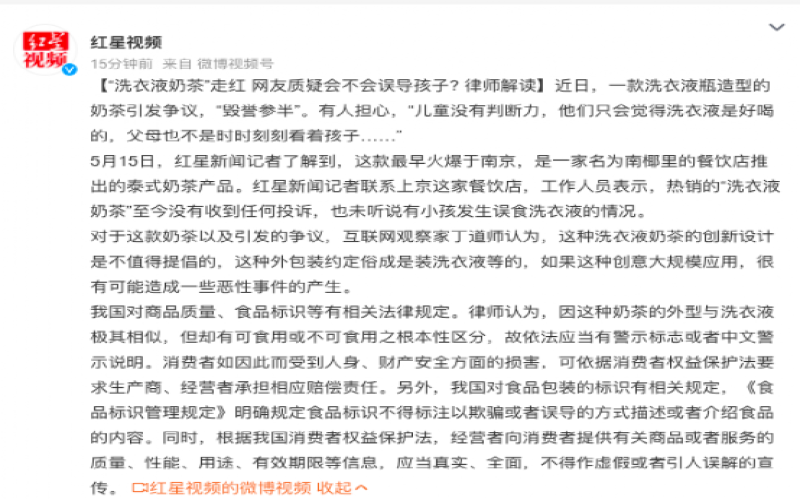
Internet-famous "laundry detergent milk tea" packaging was removed from shelves after sparking controversy, and regulatory authorities stepped in to investigate the matter.
Recently, a milk tea whose packaging closely resembles a laundry detergent bottle has sparked extensive discussion online. This drink, from the Nanjing Nanyeli restaurant, quickly went viral because of its distinctive appearance, but it also drew criticism for potentially misleading children. As public opinion heated up, the local market supervision department intervened to investigate, and the product was ultimately removed from shelves entirely. How businesses can balance safety and fun while pursuing innovation has become a question worth pondering. [more…]

Laundry Detergent-Shaped Milk Tea Sparks Heated Debate: Novel Packaging Accused of Easily Misleading Children, Experts and Lawyers Speak Out
Recently, a Thai-style milk tea with packaging resembling laundry detergent has gone viral online. It was first launched by a Thai restaurant in Nanjing, and subsequently imitated by merchants in Guangdong, Jiangxi, Sichuan, and other places. Priced at 18 yuan per bucket, this drink has attracted many young people to check in thanks to its novelty packaging, but it has also raised public concerns about children accidentally consuming it. The shop responded that the product sells well and no complaints have been received; however, experts and lawyers have pointed out that such packaging design carries a risk of misleading consumers and may violate regulations on food packaging labeling. This article will review the whole incident and explore the balance between innovative packaging and consumer safety. For coffee enthusiasts, the boundaries of beverage packaging are likewise worth pondering, and Front Street Coffee has always advocated upholding safety and responsibility amid innovation. [more…]
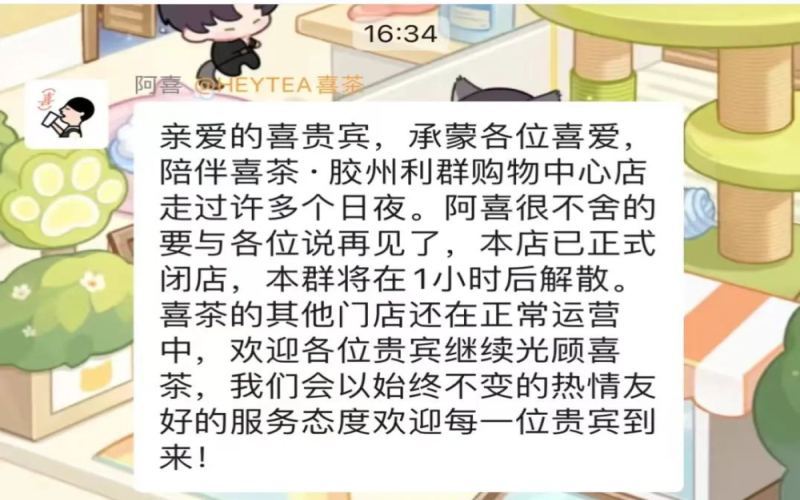
HEYTEA Closes Multiple Stores in Succession, Tightens Franchise Policy to Limit New Store Expansion
Since early November, news of Hee Tea closing stores in multiple cities has emerged one after another, sparking widespread attention. Some netizens reported that stores they frequented suddenly ceased operations—not for renovation and upgrades, but for permanent closure. According to statistics, stores closed in November include the Ganzhou Market store in Zhangye, Gansu; the Lanzhou Guofang Department Store store; and the Zhejiang University Zijingang Campus store, among other locations. Among them were both established stores that had operated for a decade and new stores that had been open for less than six months. This phenomenon is believed to be related to an internal letter Hee Tea released in September, which stated that the company would no longer pursue short-term store-opening speed and would instead focus on store quality and operational excellence. At the same time, a blogger claiming to be a city partner revealed that Hee Tea's franchise policy is being adjusted, with applications becoming more difficult, store-building costs increasing, and even a trend of "restricting new store openings and encouraging closures." [more…]
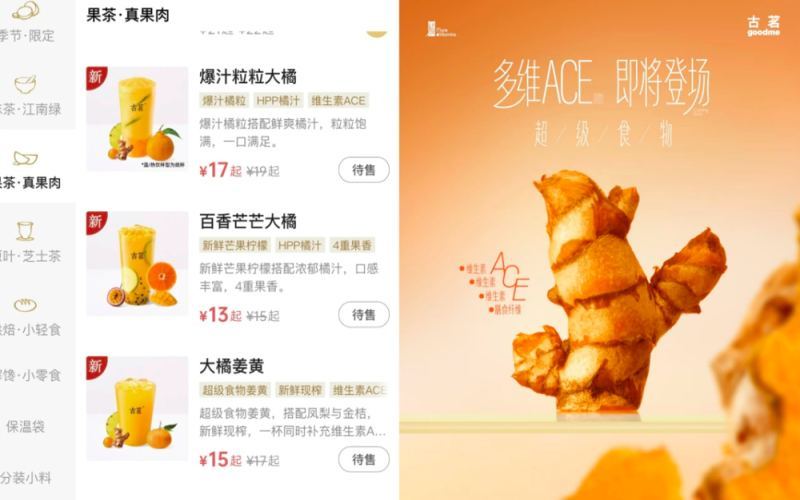
Guming's turmeric drink sparks controversy, juicy popping orange bits recipe adjusted overnight
This year, the popularity of fruit-and-vegetable teas in the beverage market has continued to rise. After Heytea helped make this category a hit, major chain brands rushed in one after another, putting vegetables like kale, wheatgrass, and beetroot into drink cups. As common fruits and vegetables ceased to feel novel, brands began looking for breakthroughs in niche ingredients. The turmeric series recently launched by Goodry is one example, yet this new product centered on a health concept unexpectedly sparked widespread controversy over its taste. Consumer reviews of turmeric were mixed, and especially the much-loved juicy orange bits drink from last year drew a strong backlash from longtime customers after turmeric was quietly added to it. Faced with an avalanche of complaints and criticism, Goodry urgently issued a notice on the same night it updated its menu and adjusted the recipe of this popular drink overnight. [more…]
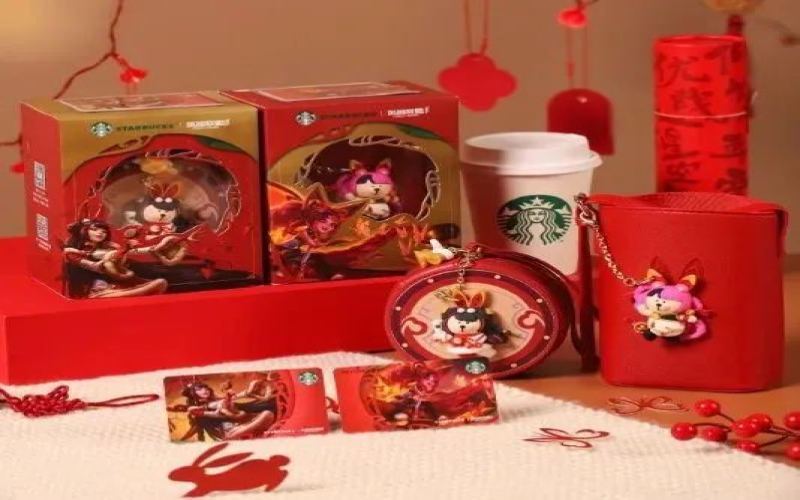
Starbucks teams up with League of Legends: Wild Rift to launch the Seraphine Star Gift Box, available nationwide on January 10 with a chance to win a 2023 Lunar New Year limited-edition skin
Starbucks has once again ventured into a cross-industry collaboration, this time targeting League of Legends: Wild Rift! Starting January 10, mobile game gift boxes themed around the hero Seraphine will be available in stores nationwide, with purchasers having a chance to win a 2023 Chinese New Year limited-edition skin. This marks another new attempt by Starbucks in the realm of collaborations, continuing its long-standing strategy of partnering with various brands and IPs. As a trendsetter for collaborations in the coffee industry, Starbucks launches different series of collaborative merchandise almost every year, covering categories such as mugs, thermoses, stored-value cards, and apparel, each time sparking a buying frenzy among fans. This article outlines the specific details of this collaboration, the development history of League of Legends, and the current status and trends of collaborative marketing in the coffee industry. For more specialty coffee bean news, follow Front Street Coffee (FrontStreet Coffee). [more…]